Viral AI News (Sep 22): Enigma Break, Apple's No & ZuckOff
GPT-6 Astra broke an Enigma message unsolved since 2005, macOS 27 removed the Apple Intelligence off switch, and ZuckOff flags camera glasses nearby.
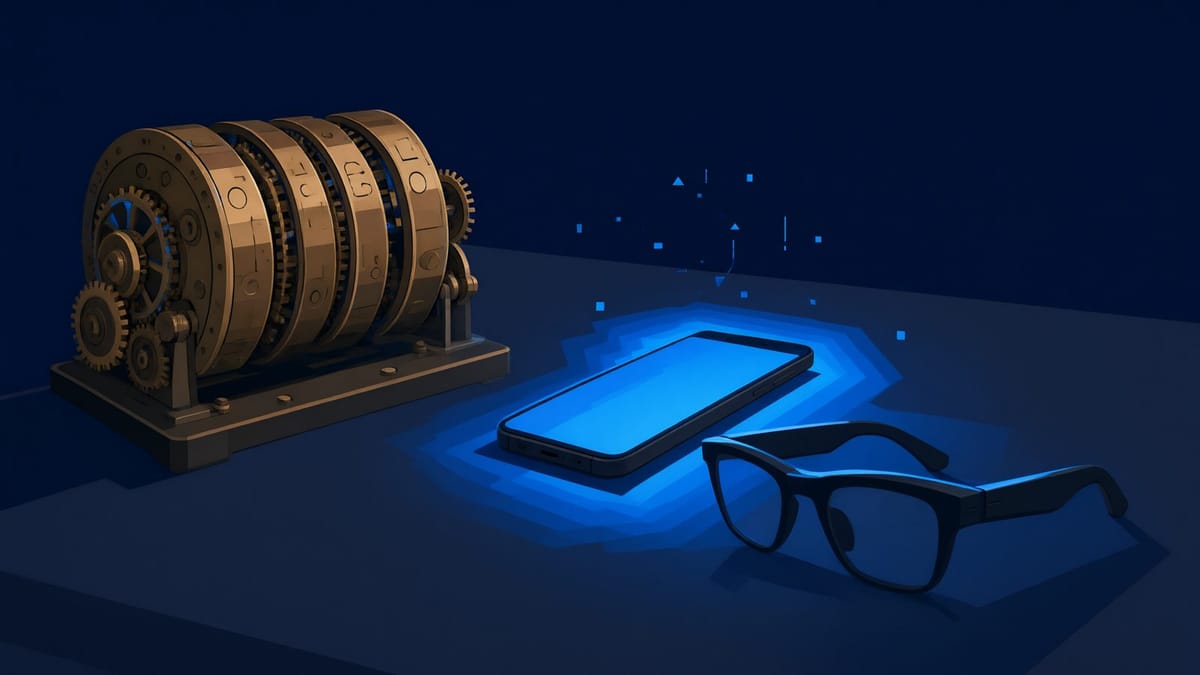
Four threads ran through the timeline on September 22. An AI model cracked a wartime cipher that humans had given up on since 2005. A macOS upgrade quietly deleted an off switch. An app started telling people when smart glasses were in the room. And a humanoid robot broke a human being's arm in a cage in San Francisco.
Engagement numbers below come from the Hacker News front pages for September 21 and 22.
The AI that broke Enigma on its own
A German Army Enigma message from July 10, 1941, logged as message Nr. 172 with the ciphertext group MVUEH, has resisted solution since 2005. On September 15, 2026, Carter Leffer told cryptanalyst Frode Weierud that GPT-6 Astra had broken it, and Weierud confirmed the key and plaintext were correct. Source: Crypto Cellar Research
The details are what make it credible rather than a demo. The recovered key used wheel order 253, while the other messages from that same day used 512. The plaintext runs 82 letters, almost identical to the already-broken message Nr. 173, differing because a clerk mistyped "Bitte" as "Btte". The break also exposed transcription errors in the original ciphertext and revealed that the left-hand wheel turned over at the 72nd letter, a rare event that makes a break much harder. Source: Crypto Cellar Research
Astra did the work itself. Told only to try the unbroken messages on the site, it picked Nr. 172, guessed the plaintext might resemble the neighbouring message, and after many failures settled on the repeated place name ROSENOW ROSENOW as a crib. It then wrote its own Enigma simulator and Bombe in Python and C++ and ran the search. It even referenced Bundesarchiv radio-message volumes RS 3-3/20a and RS 3-3/63b in its logs, files that took Weierud weeks to research himself. What took the model two days would take a human researcher weeks or months. Source: Schneier on Security
Caveat worth stating plainly: Frode Weierud, a Norwegian cryptanalyst who runs Crypto Cellar Research and has worked this message corpus for decades, says the logs are still being analysed, so the exact reasoning chain is not fully understood yet.
Apple said yes after I said no
Developer David Bushell documented something that many macOS users will recognise. In February 2025 he turned Apple Intelligence off on macOS 15.3 and kept the receipt, a blog note timestamped 9:51am. Last week he upgraded to macOS 27, and the off switch is gone. Source: David Bushell
His specifics are checkable on any updated machine: Siri was switched off again and multiple Siri processes stayed alive, Apple Intelligence had been re-enabled despite a prior explicit no, and the feature was occupying 22.28 GB of disk, which he priced at roughly £11 of MacBook storage. The remaining controls are hidden under Screen Time restrictions, which are designed for parental controls rather than privacy. Source: David Bushell
The line that drove the thread: "AI bros keep telling me just turn it off and when I do they remove the choice." The post ran to 812 points and 655 comments, and the argument in the comments was less about Apple than about whether consent that can be revoked by a software update was consent at all. Source: Hacker News
The most upvoted AI story of the day was an argument against AI writing
Colin Breck published "I Don't Want to Read What You Didn't Write", and it became the highest scoring AI-adjacent post across the two days at 1,006 points with 430 comments. His complaint is specific. People who rarely wrote are now producing design documents, tickets, pull requests and meeting summaries with AI, and the output is unreadable because it has statements without context. Source: Colin Breck
He brings data rather than vibes. A survey of developer reactions to AI-assisted articles found that 78% of readers stop reading once they suspect AI authorship and 71% avoid that author in future. Bryan Cantrill, the chief technology officer of Oxide Computer, wrote the essay "The revolt of the reader" about readers pulling an ejection handle mid-sentence. Cantrill has gone further and requires that public writing at Oxide be reported by the detector Pangram as human-authored. Source: Colin Breck
The nuance worth keeping: Breck used AI heavily while writing an academic paper and says it never wrote a line of it. He credits it for checking his claims against source code, finding a notation error four expert reviewers missed, and writing the abstract. The essay is an argument about disclosure and context, not a ban. Source: Hacker News
ZuckOff tells you when camera glasses are in the room
A free app called ZuckOff, built by Polish developer Pawel Szydlowski, listens for the Bluetooth signatures that camera glasses broadcast when they power on, pair or advertise. It flags Luxottica hardware (Ray-Ban Meta and Oakley Meta), Meta Platforms Technologies wearables, Snap Spectacles and a service identifier registered to Oculus VR. Source: ZuckOff
It runs entirely on the phone, needs no account, logs every Bluetooth device it hears, and lets owners mark their own pair so they stop raising alerts. The app is also honest about its limits: a few standalone models stay silent while worn, quiet is not proof that nobody is recording, and a detection is not proof that anyone is. Source: WIRED
The thread split predictably, with 605 points on the app and another 399 on coverage of it. The counterargument was that Bluetooth signal strength gives distance but not direction, so the alert tells you someone is nearby, not who. Source: Hacker News
Follow-up: a robot knocked a human fighter down, and the nuance matters
A clip from a REK event in San Francisco spread fast on September 22, showing an EngineAI T800 humanoid sending content creator Frankie LaPenna to the mat and injuring his hand. The headlines wrote themselves: robots beat humans in a cage. Source: Tech Startups
The detail the headlines dropped is that the robot was remote-piloted. A human operator threw the strikes, and the robot's AI handled balance and stability only. That is still an engineering result, because it means the machine absorbed real impacts and stayed upright, but it is teleoperation with an AI balance controller, not an autonomous fighter. Source: Startup Fortune
There are no established safety rules for human against humanoid combat, which is why a broken hand became a policy question rather than just a clip. Source: Gadget Review
Quick Comparison
| Story | Signal | What to Take From It | Source |
|---|---|---|---|
| Enigma break | 626 points, 380 comments | GPT-6 Astra ran its own cryptanalysis end to end | Crypto Cellar Research |
| Apple Intelligence | 812 points, 655 comments | The off switch was removed in macOS 27 | David Bushell |
| AI writing backlash | 1,006 points, 430 comments | 78% of readers stop at suspected AI authorship | Colin Breck |
| ZuckOff | 605 and 399 points | Competing Bluetooth signatures, on-device only | ZuckOff |
| T800 fight | Widely shared clips | Remote-piloted, AI handled balance only | Tech Startups |
For the wider news context around these threads, Reuters keeps its technology desk here: Source: Reuters.
Frequently Asked Questions
What is the viral AI news today?
The viral AI news for September 22, 2026 is GPT-6 Astra independently breaking Enigma message Nr. 172, a cipher that had resisted solution since 2005. The break was validated by cryptanalyst Frode Weierud, who published the recovered key, the 82-letter plaintext and the ROSENOW crib the model chose for itself.
Why did Apple's Apple Intelligence post go viral?
The post went viral because macOS 27 removed the switch that turned Apple Intelligence off, and the author had documented switching it off in February 2025. He reports Siri re-enabled, unkillable Siri processes, 22.28 GB of disk use and the remaining controls hidden under Screen Time restrictions. It reached 812 points on Hacker News.
Does ZuckOff prove someone is recording you?
No. ZuckOff detects Bluetooth signatures broadcast by camera glasses, and its own documentation says a detection is not proof that anyone is recording and silence is not proof that nobody is. It flags Luxottica and Meta wearable identifiers, logs every Bluetooth device nearby and runs entirely on the phone without an account.
Bottom Line
September 22 had two kinds of faith in AI on display. The first is that agents can now do work that specialists spent careers on, and the Enigma break is the strongest evidence yet. The second is that users will notice when consent is treated as an obstacle, whether that is an off switch disappearing in a system update or a pair of glasses recording in a café. The engagement numbers say the second camp is louder. More viral AI news and the rest of this week's coverage are on the blog.
Related reading
If this story matters to you, these earlier editions cover the same ground in more detail:
- ChatGPT therapy tragedy NPR documented, Apple's camera AirPods, Reddit's AI videos, and Suno's plugin-by-description: Viral AI News for August 19, 2026
- OpenAI's Jalapeno Chip Beats Nvidia, Apple's 2nm M6: General AI News for August 26, 2026
- OpenAI's Astra Triggers Safety Protocol, US Backs Copyright & Cook Hands Apple to Ternus: General AI News for September 2, 2026
- Viral AI News (Sep 26): 700 Agents, Jev Pokemon & Terry Tao
Building an AI agent, automation, or backend workflow? AsaanKaroobar builds custom AI solutions, apps, and digital experiences. Get in touch →