DALL-E Retires, Anthropic Beats Pentagon & 89% See No AI Gains: General AI News for August 30, 2026
DALL-E retires, a judge strikes down the Pentagon blacklist of Anthropic, and 89% of executives report no AI productivity gain after three years. Three pricing changes hit tomorrow.
Two federal deadlines collide this weekend. DALL-E's ChatGPT product retires today, and tomorrow brings Claude Sonnet 5 repricing, GPT-5.4 leaving Codex, and two Kimi models sunsetting. Meanwhile, a federal judge struck down the Pentagon's blacklist of Anthropic, the NBER found 89% of executives report no AI productivity gain after three years of adoption, and the rules governing AI agent spending are converging across Google, NIST, and the US Senate.
Court Strikes Down Pentagon's Blacklist of Anthropic
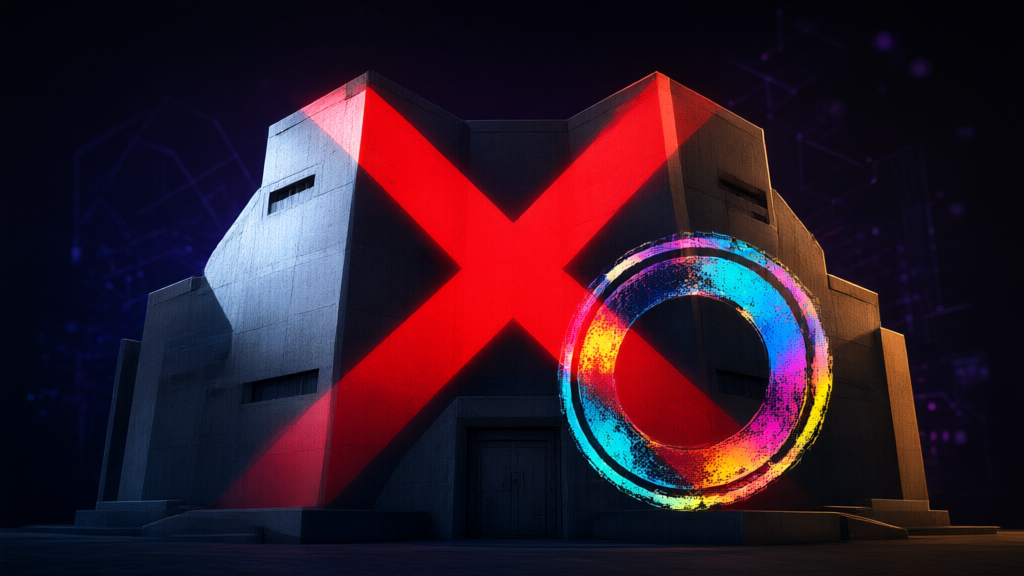
U.S. District Judge Rita Lin ruled Thursday that the Defense Department's designation of Anthropic as a national security supply-chain risk violated both the First and Fifth Amendments (AIToolsRecap). The 59-page order called the designation "arbitrary and capricious" and ordered all government directives against the company rescinded.
This case began when contract talks collapsed over Defense Department language permitting Claude to be used for "any lawful purpose." Anthropic refused, citing domestic surveillance and autonomous weapons. The Pentagon then designated Anthropic as a supply-chain risk, a label normally reserved for companies exposed to foreign adversaries. It was the first time a U.S. company had been publicly designated under that statute. The ruling continues Anthropic's strong run after its first operating profit in Q2. We covered Anthropic's self-improving AI work in yesterday's General AI News.
Judge Lin flagged a key contradiction: Defense Secretary Pete Hegseth had earlier threatened to invoke the Defense Production Act against Anthropic, a mechanism used to compel production from suppliers deemed essential. You cannot simultaneously argue a company is essential enough to compel and dangerous enough to blacklist.
A second Anthropic case remains pending in Washington D.C., where an appeals court ruled against the company in April. The circuit split means this dispute will likely reach a higher court.
Why it matters: This is the first ruling testing whether an AI company can decline specific uses of its product without being labeled a national security threat for doing so. The outcome shapes how every AI vendor negotiates government contracts going forward.
89% of Executives Say AI Changed Nothing at Their Firm
The National Bureau of Economic Research surveyed executives on three years of AI adoption (AIToolsRecap). More than 90% reported no effect on employment at their own firm, and 89% reported no effect on productivity. Job cuts across the sector have not slowed.
Linear published telemetry from paid workspaces this month that tells the same story from the opposite direction: teams using coding agents went from 21 weekly pull requests to 65, while teams without them went from 8 to 10. Total product development time rose. Engineering time on create and triage climbed roughly 17%.
The mechanism is straightforward. Agents raise throughput without raising speed because review scales with volume and lands on humans. More work moves. Nothing finishes sooner.
The picture is not uniformly flat. Salesforce measured production agent activity across 400 businesses: agents per organization went from 5 to 13, build time fell 53%, and 7 in 10 customer-service sessions now complete without a human. Anthropic published protein binder results verified by third-party labs, hitting 14 of 15 targets at 22-35% success against a 10-15% industry baseline. OpenAI's Astra resolved 10 open mathematics problems for roughly $2,000 in compute.
The pattern holds across every dataset. AI delivers measurable gains where a cheap automatic checker exists, and struggles where human judgment decides the outcome. Most office work has no checker.
DALL-E ChatGPT Product Retires Today
OpenAI removes the official DALL-E GPT from ChatGPT today. Image generation is not disappearing: ChatGPT Images continues on every tier, and custom GPTs with image generation enabled are unaffected.
What is uncertain: OpenAI has not said what happens to images generated through the old GPT after today. Their recommendation is to download anything you want to keep (AIToolsRecap). The dall-e-2 and dall-e-3 API models were already removed on May 12, 2026.
Tomorrow's Deadline: Three Changes in 24 Hours
| What | When | Impact |
|---|---|---|
| Claude Sonnet 5 repricing | Aug 31 | $2/M to $3/M input, $10 to $15 output, tokenizer change adds 10-35% tokens on code |
| GPT-5.4 leaves Codex | Aug 31 | GPT-5.4 and mini removed for ChatGPT sign-in users. Still available via API key |
| Kimi models sunset | Aug 31 | kimi-k2.5 and moonshot-v1 deprecated, migrate to kimi-k3 |
If you run coding workloads across both Anthropic and OpenAI, model your token volume this weekend. The Sonnet tokenizer change means code prompts that cost 1,000 tokens today could cost 1,100 to 1,350 on Monday.
Agent Authorization Rules Are Converging
Google published an agent payments protocol, NIST is working on agent identity and permission, and the AI AGENT Act sits in the US Senate as S.5051 (congress.gov). All three converge on the same requirement: a verifiable record that an agent was authorized for a specific task.
Cloudflare already shipped programmable wallets and per-request payments via the x402 protocol, with over 20 companies participating. Salesforce measured enterprise agent deployments going from 5 per organization to 13.
The common shape across all three initiatives is a task reference: a signed authorization with a short lifetime, carried with each request, checked per action, and logged in a tamper-evident way. None of that requires picking a protocol. Build the evidence chain and stay standard-agnostic until adoption settles.
NVIDIA Posts Record Quarter, Pauses Cloud Financing
NVIDIA reported Q2 FY2027 revenue of $96.2 billion, up 106% year over year (NVIDIA investor relations). Data Center revenue hit $89 billion, a record. The company then paused its cloud-financing program that offered credit support to AI cloud companies in exchange for revenue share. The financing program had $36 billion in commitments by late July. The pause came amid internal antitrust concerns, according to the Wall Street Journal.
NVIDIA forecasts $108 billion in revenue for next quarter. The stock is priced for continued growth, but the cloud-financing pause signals that even the dominant chipmaker is wary of the financial architecture being built around AI infrastructure.
What Else Happened
Claude Code weekly limits have run 50% above the published standard since May 13. The current boost expires August 31. If your weekly usage bar regularly passes 67%, you would hit the cap without it. Check Settings, Usage.
Forcepoint X-Labs demonstrated prompt injection through invisible email text, where HTML at zero font size delivered 1,009 characters to the model while only 537 were visible. Every test run produced a manipulated summary, including moving an invoice deadline.
Meta changed its smart glasses software after users found that covering the recording indicator mid-capture bypassed the privacy cutoff.
The OpenAI vs Apple hearing is scheduled for October 1. OpenAI models leave Cursor on November 12 following the SpaceX acquisition. The GPT-5.6 Sol promotional pricing ends around November 21.
Related reading
Related reading from earlier coverage, with the numbers behind each one:
- Nvidia hikes AI server prices over 15%, a 27B model beats frontier labs at science, and OpenAI flips on California's safety bill: General AI News for August 23, 2026
- Anthropic risk report, UK frontier-AI dependency check, GPT-5.6 Sol at half price, China cost war: General AI News for August 18, 2026
- Anthropic Targets Biggest IPO Ever, Alibaba -75%: General AI News for August 21, 2026
- Ox Alpha Beats GPT on Coding, Nvidia $100K Desktop: Viral AI News for August 24, 2026