AI Startups to Watch (Sep 18): Crusoe, Emulate & Arcee
AI startups to watch on Sep 18, 2026: Crusoe's $3.9B round at $30.9B, a one-month-old DeepMind spinout chasing $700M, and Arcee's $1B open-weight bet.
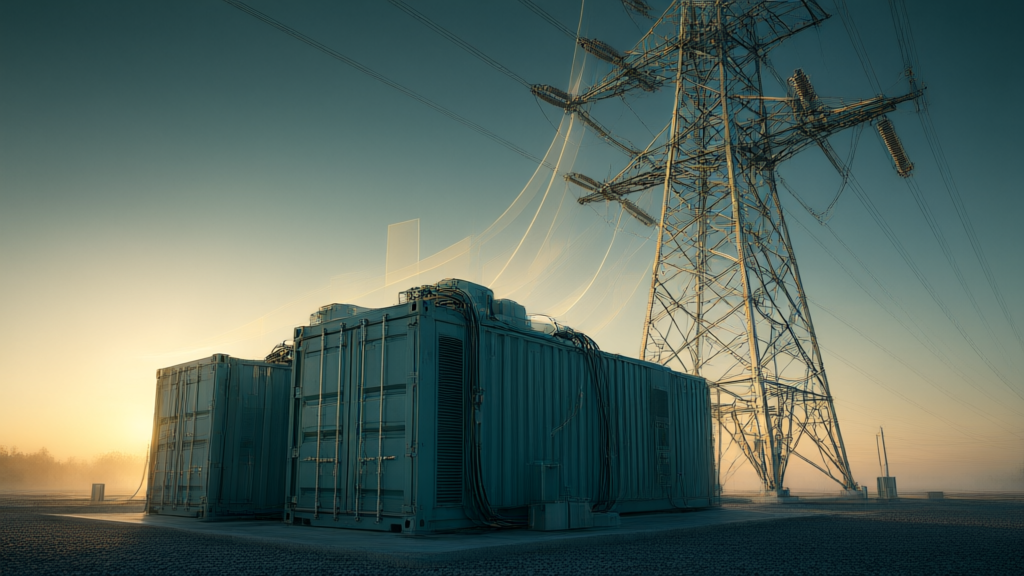
Twenty four hours produced three very different bets on the same thesis. A data center developer raised $3.9 billion at a $30.9 billion valuation. A startup incorporated last month is in talks for $700 million. And a small open-weight lab trained four models for the price of one good hiring round.
These are the AI startups to watch today, ranked by how much they change the market they are attacking rather than by headline size. Yesterday's names, including Factory and D-Robotics, are in the September 17 AI startups digest.
Startup Snapshot
| Startup | What They Do | Latest Round | Valuation | Key Differentiator |
|---|---|---|---|---|
| Crusoe | Vertically integrated AI infrastructure: power, data centers, cloud | $3.9B Series F | $30.9B post-money | Owns the power and the shell, and is an OpenAI Stargate partner |
| Emulate | World models and agent simulation, building in stealth | Up to $700M seed in advanced talks | $3.7B post-money | Founded in August by three former DeepMind Genie researchers |
| Arcee AI | Open-weight foundation models for enterprises and government | Series B, closed | $1B pre-money | Trained a 400B-parameter model inside a $20M budget |
| Hacktron AI | AI-assisted offensive security research against AI infrastructure | No disclosed round | Not disclosed | Three people, one Claude-assisted chain, one OpenAI internal repo |
Crusoe: $3.9 Billion for Power, Not Just Compute
Crusoe is an AI infrastructure provider that owns its own power generation and data centers instead of renting space. It announced the initial closing of an anticipated $3.9 billion Series F at a $30.9 billion post-money valuation on September 17.
The jump is the story. Crusoe raised $1.38 billion at a $10 billion valuation ten months ago, so the new round roughly triples its mark in under a year. It is a partner on OpenAI's Stargate builds and is now selling small modular "AI factories" that can be dropped near power sources rather than in one hyperscale campus.
Who it hurts: anyone whose pitch is "we rent GPUs." Crusoe's edge is the power interconnects and the ability to stand up capacity on its own timeline.
Emulate: One Month Old, Nearly $4 Billion
Emulate is a British AI startup working on world models and simulation for agents, founded in August 2026 by three former Google DeepMind researchers: Jack Parker-Holder, Matthew McGill and Philip Ball, who worked on DeepMind's Genie world models.
The Financial Times reports it is in advanced talks to raise up to $700 million in a seed round at a $3.7 billion valuation including new capital, with Bloomberg confirming the talks. Index Ventures and Lightspeed Venture Partners are poised to co-lead, according to Dealroom.
Emulate is the third UK neo-lab to leave DeepMind's London office this year with nine figures: Ineffable Intelligence raised $1 billion at a $5 billion valuation, and Recursive Superintelligence raised $600 million at $4 billion. Demis Hassabis stepping down as DeepMind chief executive to become chair has clearly not slowed the spinout pipeline.
Who it disrupts: simulation and world-model tooling is currently sold by a handful of robotics and autonomy vendors, and a well funded lab aimed at the same problem compresses their pricing power.
Arcee AI: A $1 Billion Valuation Built on $20 Million of Training
Arcee AI is an open-weight model company that sells models enterprises can run inside their own perimeter, a direct answer to teams that want frontier performance without sending data to a hosted API.
Fortune reported that Arcee trained four open-weight models for about $20 million, including Trinity Large, a 400 billion parameter model released in early 2026. Chief executive Mark McQuade spent 65 to 70 percent of the company's $30 million in the bank on that bet. The payoff is a Series B at a $1 billion pre-money valuation. Arcee would not disclose the round size; a source told Fortune it was at least $150 million.
The specific target is China. McQuade says the company is chasing Z.ai's GLM Flash, and that the United States leads in closed models while having "dropped the ball" on open weights. Arcee's models have beaten Meta's Llama 3 and benchmark on par with Mistral and Chinese releases. The new cash funds more open-weight models and an expanded partnership with the U.S. Department of Energy.
Hacktron AI: The Three-Person Team That Reached OpenAI's Repo
Hacktron AI is a San Francisco security startup that probes frontier AI companies for infrastructure weaknesses that AI agents can exploit. It is not a funding story, which is exactly why it belongs here.
Three researchers used Anthropic's Claude Opus 5 to chain a flaw in OpenAI's Discourse forum into account takeover and then into OpenAI's internal GitHub environment, opening a pull request in the internal monorepo in under 72 hours. The Wall Street Journal broke the story and OpenAI paid a $6,500 bounty.
The business model implication is blunt: if a three-person team can reach an internal repository in three days, then AI infrastructure is now an offensive security market, and the incumbents are the targets.
The Pattern: Capital Is Buying Bottlenecks, Not Models
Three of today's four moves are about constraints rather than capabilities. Crusoe is buying power and land. Emulate is buying research talent before it has a product. Arcee is buying efficiency, since $20 million of training is a rounding error next to what frontier labs spend. The differentiator that investors are paying for is no longer a benchmark score, it is control over a scarce input.
Find every company we have covered in the AI startups tag page.
Frequently Asked Questions
What are the top AI startups to watch today?
Crusoe, which raised $3.9 billion at a $30.9 billion valuation for AI infrastructure. Emulate, a one-month-old British world-model startup in talks for a $700 million seed at a $3.7 billion valuation. Arcee AI, valued at $1 billion after training four open-weight models for about $20 million. All three closed or advanced rounds this week.
Why is Emulate worth $3.7 billion one month after founding?
Emulate was founded in August 2026 by Jack Parker-Holder, Matthew McGill and Philip Ball, three researchers behind Google DeepMind's Genie world models. Investors are pricing the team, not the product: Index Ventures and Lightspeed are set to co-lead a seed of up to $700 million. It is the third DeepMind spinout this year to raise nine figures.
How did Arcee AI train a 400 billion parameter model for $20 million?
Arcee spent about 65 to 70 percent of its $30 million cash on training, burning roughly $20 million across four open-weight models including Trinity Large. That budget buys fewer tokens and more engineering discipline than frontier labs use. The result was benchmarks on par with Mistral and Chinese open models, and a Series B at a $1 billion pre-money valuation.
Related reading
Related reading from earlier coverage, with the numbers behind each one:
- AI Startups to Watch (Sep 16): Hang Ten, Arcee & TypeSafe
- AI Startups to Watch (Sep 5): Gimlet, Crusoe & FluidStack
- AI Startups to Watch (Sep 15): Profound, AIUC & Delos Data
- AI Startups to Watch (Sep 14): Motive, Mecka & YC Deep Tech
Building an AI agent, automation, or backend workflow? AsaanKaroobar builds custom AI solutions, apps, and digital experiences. Get in touch →